


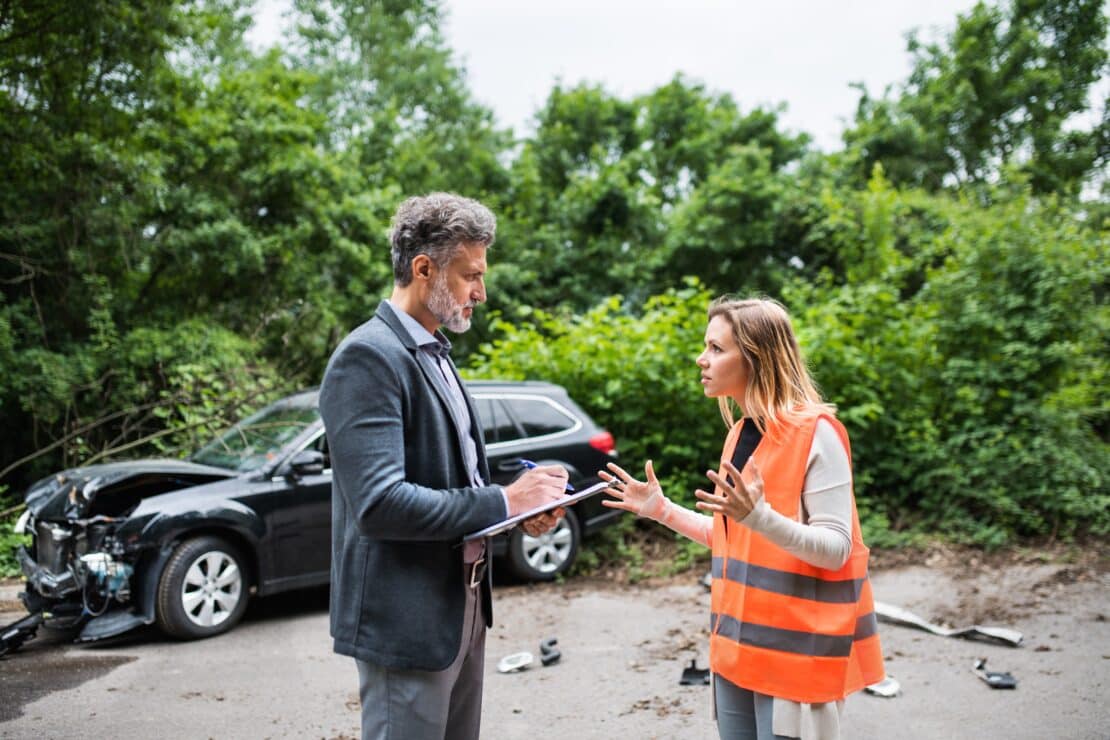
After a car crash in Fresno, determining who is at fault can be a complicated process that often involves in-depth investigation. Get a free case evaluation for your car accident to discuss how accident investigators analyze the incident. They look at physical evidence, examine the scene, interview witnesses, and consult with accident reconstruction experts to build an accurate timeline of the events leading up to the crash.
This thorough analysis helps pinpoint liability, ensuring that the responsible parties are held accountable and that victims can pursue the compensation they deserve.
Initial Assessment at the Scene
In the event of a crash, especially in places without hospitals or rescue, trained personnel swiftly arrive to secure the area and ensure the safety of all parties involved in the collision. Their initial job is to look for any injuries and call the authorities if need be. They also make sure that traffic is guided around the incident area safely. Such early actions prevent further damage and also help keep order at the scene.
Gathering Physical Evidence
Experts initially gather evidence from the scene of the accident. The patterns found on the road (such as skid marks) can help decipher vehicular speed, positions, and debris, which give away the location of vehicles involved in the collision/accident. Investigators take pictures of every angle to capture the place accurately. They essentially reconstruct what took place before and during the crash. The tire marks and the distance between the vehicles give us a better picture.
Interviewing Witnesses and Involved Parties
Motorists, passengers, and even passersby can help create a more accurate account of what happened. The investigators then go to each person and take his or her telling of events. Together, the three perspectives fill in the gaps in the official report. When comparing statements, contradictions or confirmations may arise among statements, increasing the clarity of the conceived version of the incident.
Reviewing Vehicle Damage
A professional can look at the extent of the damage to each car and its location to determine how the impact occurred. The specific damage and the damage pattern can lead to answers to important questions about the mechanism of collision and the direction of force application on the vehicles. They check the vehicle for any signs of previous accidents or repairs, which would impact their assessment. The relevant dents, scratches, and marks are all documented in detail with notes and photographs.
Analyzing Road and Weather Conditions
Each collision outcome is influenced by the circumstances of the collision itself, such as the road surface and weather at the time. Experts are assessing whether the vehicle lost control due to rain, ice, debris blowing into it, or other factors. They look for potholes, faded markings, or defective traffic signals that may have been a factor. This context explains how those involved decided what actions to take—or not take.
Checking for Traffic Violations
Detectives look into whether any traffic crimes were committed, like speeding, running signals, or lane violations. Part of that process includes police reports and citations issued at the scene. Evidence of violations can influence the determination of culpability for the crash. And if it has good traffic camera footage, that can be a plus.
Utilizing Technology and Reconstruction Tools
Modern technology allows for a comprehensive investigation of wrecks. For example, specialists may use 3D modeling software to essentially recreate the moment. Event data recorders, more commonly known as vehicle ‘black boxes,’ track information like speed and braking up until the crash occurs. Such electronic records provide objective data, which aids in validating or impeaching witness testimony.
Compiling the Official Report
Once they have all of the necessary information, investigators compile a report as a whole. It contains sketches, images, witness statements, and technical conclusions. Investigators carefully elucidate the approach they took to reach each conclusion. This report is the most important source of information for insurance companies, lawyers, and the courts.
Determining Contributing Factors
Blame is not laid at a solitary door lightly. Investigators consider all factors that might have contributed, including distraction, impairment, or mechanical failure. They also consider any third parties that may have had input into the incident, such as maintenance of roads or malfunctioning traffic signals. All of them are taken into account before a final decision is made.
Conclusion
Determining liability after a motor vehicle crash involves a careful and systematic process. Using physical evidence, eye-witness accounts, and technology, investigators create conclusions based on what they can observe alone. They provide impartiality in insurance and court cases and also serve as a valuable piece of prevention towards building safety against future accidents. With this knowledge, each constituent can understand the need for a fair and thorough investigation.